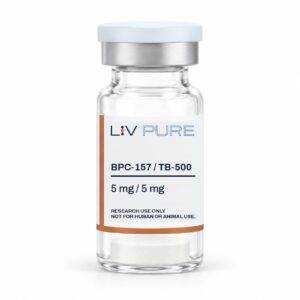
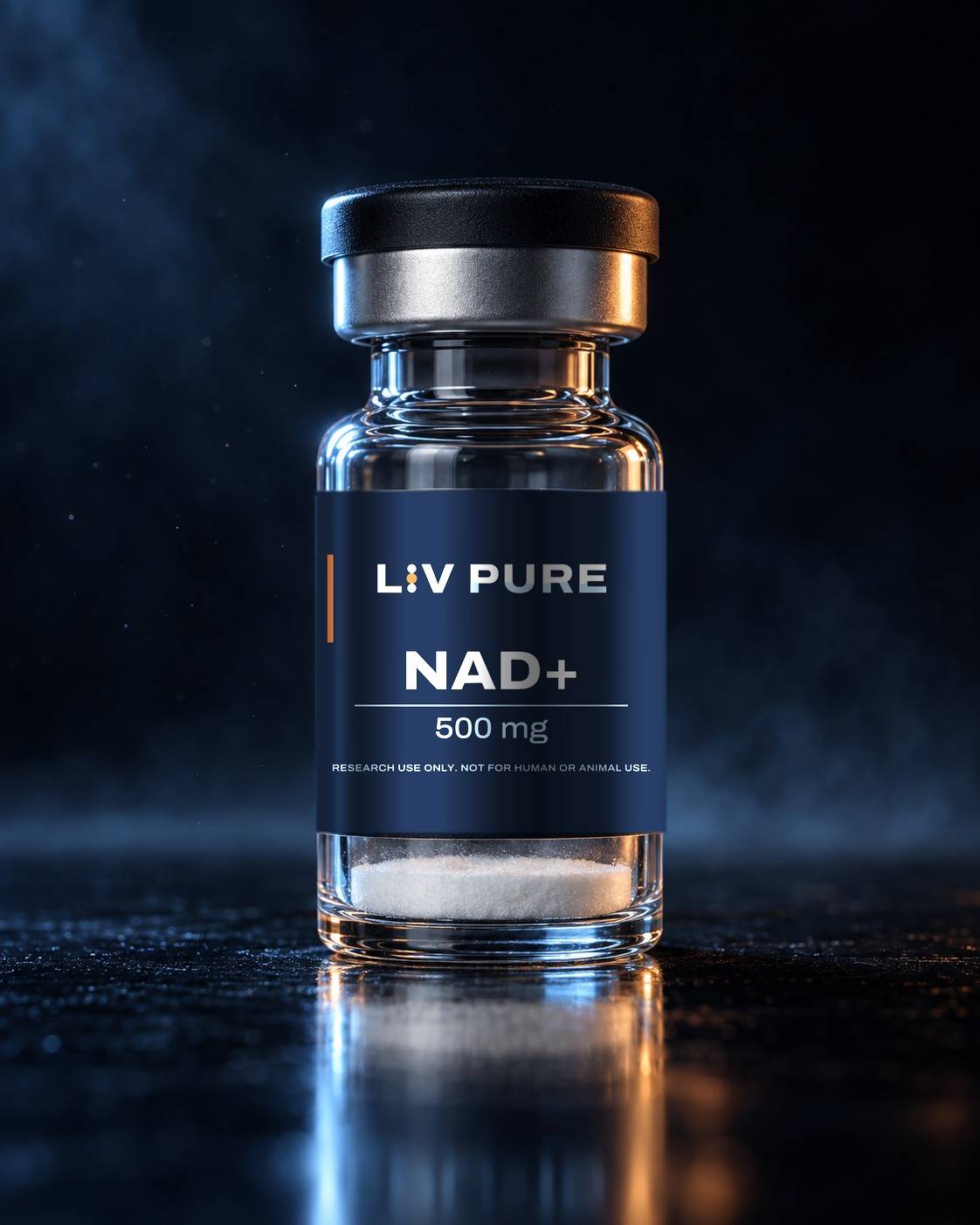
Lyophilized (freeze-dried) peptides are stable, but only if they are kept cold, dry and dark. This guide covers storage temperatures, why moisture and light matter, how to avoid freeze-thaw damage, and how to handle stock solutions once a vial is opened.
Key takeaways
- Sealed vials: 2 to 8 °C for short-term holding; −20 °C or below for long-term storage.
- Keep them cold, dry and sealed. Moisture, heat and oxygen (and, for some sequences, light) are the main causes of degradation in lyophilized material.
- Let cold vials reach room temperature before opening so condensation does not form on the powder.
- Aliquot stock solutions once and store them frozen, rather than thawing one tube over and over.
Why lyophilized peptides are stable
Lyophilization removes water by freezing the purified peptide solution and then sublimating the ice under vacuum. Without water, most of the chemical reactions that break peptides down (hydrolysis, deamidation, oxidation and aggregation) slow dramatically. That is why research peptides ship as a dry “cake” in a sealed vial rather than as a liquid. The stability lasts only as long as the powder stays dry.
Storage temperatures
- Short-term (days to weeks): refrigerate sealed vials at 2 to 8 °C.
- Long-term (months): store sealed vials at −20 °C or colder. For the longest holding times, −80 °C is common in research labs.
- Shipping and brief exposure: sealed lyophilized vials tolerate a few days at ambient temperature in transit. Move them into cold storage on arrival.
If a product label or its certificate of analysis gives a different storage note, follow the label.
Moisture: the main enemy
Lyophilized powder is hygroscopic: it pulls water from the air. The most common way moisture gets in is condensation, when a cold vial is opened in a warm room. To prevent it:
- Take the vial out of cold storage and leave it sealed until it reaches room temperature (usually 15 to 30 minutes).
- Open it, weigh out or dissolve the amount the assay requires, and reseal promptly.
- For long-term storage of opened powder, a desiccator or a sealed container with desiccant helps.
Light
Peptides containing tryptophan, tyrosine or histidine are the most light-sensitive, while cysteine and methionine are mainly prone to oxidation by air. Keep vials in their box or in amber containers, and avoid leaving them under bench lighting.
Stock solutions and freeze-thaw cycles
Once a peptide is in solution it degrades much faster than as a powder. Choose the solvent and buffer from the method being run and from the peptide’s solubility. Hydrophobic sequences may need a small amount of organic co-solvent, which should be checked against the assay. Then:
- Aliquot once into single-use volumes and freeze them, rather than refreezing a single stock tube.
- Label every tube with compound, concentration, solvent, date and lot number.
- Avoid repeated freeze-thaw cycles. Each cycle can promote aggregation and loss of material.
- Peptides containing cysteine, methionine or tryptophan oxidize more readily in solution; degassed buffers and minimal headspace help.
A quick storage checklist
- On arrival, check the vial seal and match the lot number to its certificate of analysis.
- Move sealed vials to 2 to 8 °C (short-term) or −20 °C (long-term).
- Warm to room temperature before opening.
- Prepare only the stock solution the experiment needs; aliquot and freeze the rest.
- Record every step in the lab notebook.
Liv Pure product pages list the supplied form and storage conditions for each compound, and the guide to reading a certificate of analysis covers what to check on arrival.
Frequently asked questions
How long do lyophilized peptides last?
Sealed and stored at −20 °C, many lyophilized peptides remain stable for months to years; the actual shelf life depends on the sequence. Use the lot’s documentation as the reference.
Is it a problem if vials arrive at room temperature?
Short exposure during shipping is expected for sealed lyophilized vials. Refrigerate or freeze them on arrival.
Can I refreeze a thawed stock solution?
It is better not to. Aliquoting into single-use volumes avoids the need.
Last reviewed November 2026.
All Liv Pure products are supplied for laboratory research use only. Not for human consumption, and not for human or animal use. Not for diagnostic, therapeutic or cosmetic purposes. Sold only to purchasers 21 and older.